Right Brain Spelling
Ah, Spelling. What’s the best way to study? Your oldest child takes a pre-test, and then writes the ones she got wrong five times each, and she has it. Your middle child has memorized all the phonics rules for spelling. He is so good at hearing the sounds in the words, and applying the phonics rules. The regular spelling process as taught in the workbooks works well for him. Your youngest child takes a pre-test, and writes out the spelling words he got wrong, but by the fifth time writing it he has misspelled it again on the practice paper. He can’t distinguish the vowel sounds well, so he can’t remember how it is spelled from the sound. Never mind learning the rules. For him, you have found that if you get in touch with the creative part of yourself by making make a silly picture on the “tricky” letters in the word, he can remember it, and gets a big grin on his face. This is RIGHT BRAIN SPELLING!
Adults and children alike love the use of memory hooks for spelling words that do not follow the rules. Here are some of the popular ones:
- Find a small word in a big word, and give it a little story: for the word “principal”, you find the “pal” and say to yourself, “the principal of the school is my pal.” The word “believe” has the word, “lie” in it. You don’t want to believe a lie. The word “important” has an “ant” in it. An ant tries to feel important but he is too small. This is fun to do, and very effective. I’m sure you have your favorites.
- For an auditory hook, you can use exaggeration of one sound, or saying it in an odd way. We do this for, “Wed NES day”. We use it for silent letters like in comb…we say “comBUH”. It’s fun to play with words like that.
- Jazz up silent or confusing letters visually, by putting a zany picture directly on the letter. This is the method that worked the best for my “Twice Exceptional” eighth graders.
-
Sale!
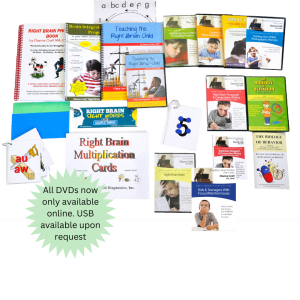 A complete starter system for struggling learners. The Foundational Package includes Brain Integration Therapy, Right Brain teaching strategies, nutritional training, immediate online workshop access, and a NEW step-by-step Quick Start Guide & Teacher’s Manual to help parents confidently begin at home.
 -
Sale!
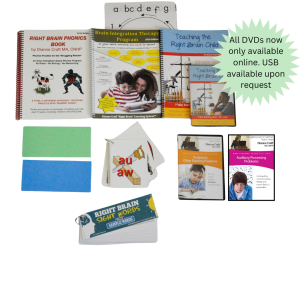 A complete, brain-friendly reading program designed for struggling learners. Includes step-by-step lesson plans, visual phonics tools, and immediate online workshop access to help reading finally click.
 -
Sale!
 Discover simple, brain-friendly teaching strategies that help struggling learners finally “get it.” This workshop shows parents how to use visual memory and Right Brain methods to make reading, spelling, math, and learning easier.
 -
Sale!
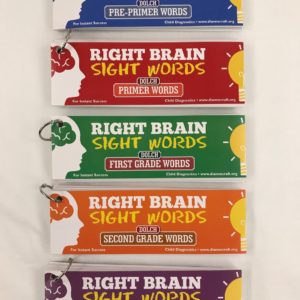 This method of learning works wonderfully with students of all ages and abilities:
- Kindergarten teachers can give their students a real “leg up” in learning the early sight words.
- First grade teachers use this method to ensure that all their students learn the basic sight words by the end of the year.
- Second and third grade teachers use it for those students who are reading below grade level.
- ESL teachers find them very effective for their population.
- Struggling readers, students on an IEP, and students with an auditory processing glitch find these cards invaluable for making a “leap” in learning.